• Skip to primary navigation
  • Skip to main content
  • Skip to footer
Rising Star Real Estate
Florida Real Estate Experts
(850) 613-6832 | Login / Register
  • Search
    • Search All Listings
    • Office Listings
    • Waterfront Properties
    • Foreclosures & Short Sales
    • Hot Sheet
    • Email Alerts
    • Market Reports
  • Neighborhoods
  • About
    • About Us
    • Testimonials
  • Blog
  • Contact
  • Search
    • Search All Listings
    • Office Listings
    • Waterfront Properties
    • Foreclosures & Short Sales
    • Hot Sheet
    • Email Alerts
    • Market Reports
  • Neighborhoods
  • Buyers
    • Why Use a Realtor?
    • Getting Pre-Approved
    • Closing Costs Explained
    • Property Taxes
    • Renting? 4 Quick Ways to Buy a Home with Little or NO Money Down
  • Sellers
    • What’s My Home Worth
    • What’s the Right Price for my Home?
    • Top Questions to Ask a Real Estate Agent
    • Preparing Your Home to Sell
  • About
    • About Us
    • Our Agents
  • Contact
Home > Buying a Home > Page 22

Buying a Home

Saying “I Do” to Homeownership

Saying “I Do” to Homeownership

Getting married is an exciting time that comes with a lot of new adjustments, including when it comes to finances. Establishing a healthy financial relationship as a married couple will pay off, especially if you and your spouse plan to become homeowners someday or plan to buy a bigger house. Here are some ways to help you stay on top of your finances after you walk down the aisle together.

Assess your financial situation and consider financial goals. Whether or not you plan to have joint bank accounts, if you’re purchasing a home together, it’s important to have a clear understanding of your overall financial situation. What is your student loan balance? How much do you owe on credit cards? What is your take-home pay? How much do you plan to save for retirement? Answers to these questions all impact how much house you can afford – or if now is even the right time to buy. Also worth considering: whether you plan to be a one- or two-income family in the future. For example, if you plan to have a family and for one spouse to stay at home to raise the kids, this can affect your income, which, in turn, affects the size of mortgage loan you want to take on.


Know your credit scores. You can pull a free credit score from websites like CreditKarma.com, which will give you a pretty good idea of where your credit score falls. You may also receive one free copy of your credit report each year from each of the three credit bureaus – Experian, Equifax and TransUnion. Take advantage of these tools and know your credit score before talking to a lender.


Get prequalified for a home mortgage loan. Getting prequalified* from a lender means you’re a serious buyer. So before you ever begin house shopping, get prequalified to show your real estate agent and potential sellers that you are able to get necessary financing. Prequalification also helps you know how much you can afford, so you can narrow down your search and won’t waste your time looking at homes outside your budget.


Put your relationship first. Above all else, keep in mind that your relationship with your significant other is more important than any home. Making big financial decisions can put a strain on any relationship, so step into this process with an open mind and be willing to work together and compromise to find the house that best suits your wants and needs as well as your budget.


Christine Cleek

ABR, CRS, SFR, E-Pro

Broker, Owner

Rising Star Real Estate

850-217-0990

Chris@RisingStarRealty.com

www.RisingStarRealty.com


2016 Voted in the TOP 100 MOST INFLUENTIAL

REAL ESTATE AGENTS IN FLORIDA


2015 Trulia TOP RANKED Real Estate Agent 

Based on Client Reviews & Ratings!


Featured in  January 2014 FLORIDA REALTOR MAGAZINE 

This prestigious award honors excellence among the top 1% of 

agents in the country based on 2014 sales and client reviews. 
 

Visit Rising Star Real Estate on FACEBOOK!

Join my Network on Linkedin!

Follow me on Twitter!

FOUNDATION CRACKS

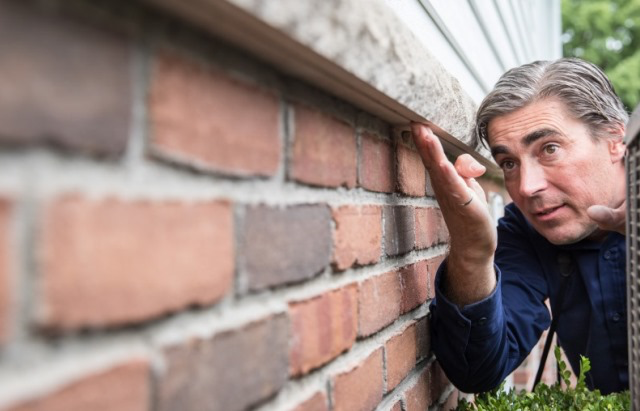
Houses of any age will shift and settle over time, resulting in cracks. Cracks may appear in finishes, structural components or both. Though they usually don’t have any structural significance, it’s worth some visual detective work to help homeowners understand the difference between different types of foundation cracks.

Shrinkage Cracks

Concrete shrinks as it cures, so a newly poured concrete foundation may develop small vertical shrinkage cracks, which are not structurally significant. Characteristics of shrinkage cracks include:

  • The crack will be small and vertical, usually less than 1/8” wide.
  • The crack is in the foundation wall only and does not extend up through the structure.
  • Shrinkage cracks usually occur in the middle third of the length of the foundation wall. If it’s located toward the end of the length of the foundation wall, it is probably not a shrinkage crack.
  •  

Settlement Cracks

Like shrinkage cracks, settlement cracks are vertical, but they extend up through the structure. In block or brick foundations, cracks may follow the mortar joints in a step pattern rather than vertical. Most settlement cracks are caused by short-term settlement. Ongoing settlement is uncommon but can cause structural problems over time. Here are some ways to get an idea of whether ongoing settlement is likely:

  • Crack size: Settlement cracks more than 1/4” wide are more likely to indicate ongoing movement than smaller cracks.
  • Direction of movement: The edges of a typical settlement crack line up and fit together vertically, much like pieces of a puzzle. If the edges of the crack have shifted, or sheared, so that they no longer line up, the 1/4” rule described above doesn’t apply. This type of crack can be a significant structural concern.
  • Repaired and re-cracked: Unless it is a hairline crack, a settlement crack that was repaired and has re-cracked could also indicate ongoing movement and should be addressed.
  •  

Horizontal Cracks – Basement Foundation Wall

In homes with true basements, a horizontal crack in the foundation wall, below grade and running the full length of the basement is likely a sign of foundation failure. For a house with a full basement, the soil outside the foundation wall exerts a tremendous amount of pressure on the foundation wall. Occasionally, unanticipated additional loads exert pressure and cause horizontal cracking in the foundation wall. Do not wait to address this potential issue as it could cause much greater problems down the line, including structural failure.


Christine Cleek

ABR, CRS, SFR, E-Pro

Broker, Owner

Rising Star Real Estate

850-217-0990

Chris@RisingStarRealty.com

www.RisingStarRealty.com


2016 Voted in the TOP 100 MOST INFLUENTIAL

REAL ESTATE AGENTS IN FLORIDA


2015 Trulia TOP RANKED Real Estate Agent 

Based on Client Reviews & Ratings!


Featured in  January 2014 FLORIDA REALTOR MAGAZINE 

This prestigious award honors excellence among the top 1% of 

agents in the country based on 2014 sales and client reviews. 


Visit Rising Star Real Estate on FACEBOOK!

Join my Network on Linkedin!

Follow me on Twitter!

6 ways to prepare now for Hurricanes!

The worst thing that people who live along coastlines can do is not to prepare for tropical storms and hurricanes.

According to the National Hurricane Center, the two key factors contributing to weather safety during hurricanes are preparing in advance for the risks and to act on those preparations when alerted by emergency officials. Here are some helpful tips to help you prepare for the 2019 Hurricane Season! 

1. Evacuation planning

The main reason people have to evacuate during hurricanes is from a storm surge, which is an abnormal rise of water generated by a storm’s winds that can reach heights well over 20 feet and can span hundreds of miles of coastlines, according to the National Hurricane Center. 

Evacuation planning is number one on the list.

I urge owners to find out today if they live in a hurricane evacuation area, which is an area in which residents must leave their homes in the event of a hurricane.Local governments provide the public with information about evacuation areas and the evacuation plans.

Some people will actually test the evacuation route in good weather. Waiting until the day of the hurricane isn’t a smart idea since everyone will be in a heightened state of anxiety.

While people who live in storm surge areas fall within areas that are urged to evacuate during a hurricane, people who live outside of these zones should still look into safety precautions during a hurricane.

2. Buy supplies

This is one of the most important things! Buying supplies well in advance and keeping those supplies on hand should evacuation be required will make life much easier. You do not want to be the last ones to get to the  store. Local stores do their best to stock up prior to the storms arrival, but supplies are limited. If you wait until the hurricane is on your doorsteps, you are going to be waiting in long lines and they could even be out of the stuff you need.

Those living in evacuation areas should keep a hurricane kit handy that is stored in a way that is easy to grab and bring to an evacuation shelter. These kits should include water, food, blankets and clothing.

Other Hurricane Kit Essentials include: first aid kit, battery-powered or hand-crank radio, flash lights and plenty of batteries, whistle to signal for help, and local maps. 

EXTRA TIPS – You should fill up your bath tubs with water. You’ll also want to gas up your car because local gas stations will run dry. 

3. Check insurance coverage

Property owners and renters should be sure to insure their homes against flooding. Many people do not realize it is not apart of standard home and renters insurance.

Tenants and home owners can contact their renters or home insurance provider to buy flood insurance, and they should do so even if they do not live right along the coastline.

4. Make copies of important documents

Those living in or near hurricane areas should make copies of proof of ownership documents of any property not limited to their homes, cars and boats.

These documents can be stored in the hurricane kit or in any safe location that does not risk being damaged during the hurricane.

5. Protect your home

Residents and tenants should inspect their homes to confirm that there is no damage that a hurricane could increase.

Any issues with the overall structure should be repaired, including loose shingles or damaged roofs. Any possible compromises to the roof or house will become an open avenue for strong and gusty winds.

Residences with yards should also put away or secure anything laying on the ground outside that could get tossed into the air and become debris during high winds.

If you have storm shutters, be sure to install them onto your windows and doors to secure your home from damaging winds. If  you do not have storm shutters, no worries! You can purchase supplies, including plywood to cover windows and extra security to keep doors from blowing open at your local hardware store. 

6. Back up your electronics

Aside from keeping extra batteries and chargers around during a hurricane, people are also encouraged to backup any electronic devices.


Christine Cleek

ABR, CRS, SFR, E-Pro

Broker, Owner

Rising Star Real Estate

850-217-0990

Chris@RisingStarRealty.com

www.RisingStarRealty.com


2016 Voted in the TOP 100 MOST INFLUENTIAL

REAL ESTATE AGENTS IN FLORIDA


2015 Trulia TOP RANKED Real Estate Agent 

Based on Client Reviews & Ratings!


Featured in  January 2014 FLORIDA REALTOR MAGAZINE 

This prestigious award honors excellence among the top 1% of 

agents in the country based on 2014 sales and client reviews. 


Visit Rising Star Real Estate on FACEBOOK!

Join my Network on Linkedin!

Follow me on Twitter!

3 Tips to Maintain the Well-Being of Your Home’s Foundation

When was the last time you took a close look at your home’s foundation? If you find yourself racking your brain trying to determine whether it was last spring, or two summers ago, it’s definitely been too long. From simple tasks to time-consuming projects, homeowners often don’t have the time—or the space on their to-do list—to add yet another item. However, when it comes to your home’s foundation, there’s no time like the present. 

A pro-active approach to caring for your home’s foundation is not only economical, it can also save you a lot of money—and headaches—down the road. 

1. Check the drainage around your home by ensuring that gutters and spouts drain away from the foundation.

2. While plumbing leaks under the house foundation are not uncommon, homeowners can have a plumbing pressure test done to make sure there are no leaks under the slab.


  1. The ground moisture around the home’s perimeter should remain as constant as possible. Periodic use of a sprinkler system and soaker hoses in the summer time is recommended, but can also be done in the winter if the weather is dry.If you’re pressed for time, contact a reputable foundation repair company to have an inspection conducted inside and outside the house. Most of the solutions are affordable and extremely important to the well-being of the structure. Source: www.premierfoundationrepair.com


Christine Cleek

ABR, CRS, SFR, E-Pro

Broker, Owner

Rising Star Real Estate

850-217-0990

Chris@RisingStarRealty.com

www.RisingStarRealty.com


2016 Voted in the TOP 100 MOST INFLUENTIAL

REAL ESTATE AGENTS IN FLORIDA


2015 Trulia TOP RANKED Real Estate Agent 

Based on Client Reviews & Ratings!


Featured in  January 2014 FLORIDA REALTOR MAGAZINE 

This prestigious award honors excellence among the top 1% of 

agents in the country based on 2014 sales and client reviews. 


Visit Rising Star Real Estate on FACEBOOK!

Join my Network on Linkedin!

Follow me on Twitter!


Tidying Up: Ways to Get Ahead of House Clutter

We get it – a bit of clutter is inevitable in the houses of even the most organized homeowners, especially if you have kids. Fortunately, there were some proactive ways to help you stay on track if you constantly find yourself battling the monster that is messes. Here are some tricks to help keep the smallest rooms in your home organized and clutter-free.

Pantry Organization

Fill Mason Jars – Clear, glass jars with flip-top lids (or clear, airtight plastic containers) are perfect for stashing kitchen ingredients. No more digging through Ziploc bags when you need to find the chocolate chips or chopped pecans. Store these items in a jar where they’ll stay fresh and you can easily spot them when you need them.

Organize with Magnetic Spice Jars – All those tiny bottles of spices are easy to knock over and can make quite a mess in your pantry. Plus, they take up valuable shelf space because they don’t stack neatly. Keep your herbs and spices organized with magnetic spice jars. Hang the jars on the side of your fridge or conceal them on the back of the pantry door with the help of magnetic paint.

Break Out the Baskets – Keep your meal planning nice and simple. Plan and shop for multiple meals at once, then store all non-perishable foods for each meal in individual bins or baskets. Label each basket by day or meal and place them in a prominent spot in your pantry for easy access. When it’s time to cook, everything you need for that meal is ready to go in one place.


Closet Organization 

Group Like Items – Organize similar items together to make things easy to find and keep tabs on what you have. For example, organize clothes by groups such as: work shirts, casual shirts, dresses, slacks, shoes, long-sleeved shirts, short-sleeved shirts, etc.

One-In-Three-Out – This is the secret to decluttering your home. When you bring in anything new (clothes, shoes, accessories, toys, etc.) donate, recycle or sell three items of the same category.

Hang Bags on Hooks – Keep your accessories neat and organized in your closet with durable hooks (like shower curtain hooks). Simply latch the hook over the clothes rod in your closet then hang your purses, belts and other accessories.


Christine Cleek

ABR, CRS, SFR, E-Pro

Broker, Owner

Rising Star Real Estate

850-217-0990

Chris@RisingStarRealty.com

www.RisingStarRealty.com


2016 Voted in the TOP 100 MOST INFLUENTIAL

REAL ESTATE AGENTS IN FLORIDA


2015 Trulia TOP RANKED Real Estate Agent 

Based on Client Reviews & Ratings!


Featured in  January 2014 FLORIDA REALTOR MAGAZINE 

This prestigious award honors excellence among the top 1% of 

agents in the country based on 2014 sales and client reviews. 


Visit Rising Star Real Estate on FACEBOOK!

Join my Network on Linkedin!

Follow me on Twitter!


What to Ask Your Landscaper Before They Dig In

If you’re designing a new garden, patio or outdoor living space, you’re likely going to work with a landscaper. Aside from the cost of the project, there are some important conversations you should have with your landscaper before they break ground. Here are four questions to help.

Can I see examples of your work? It’s an error to assume someone will get your design ideas without seeing past examples of their work. They likely have a stack of examples, so all you have to do is ask.

How long will the process take? Make sure to have a clear time window (dates are preferable) so you know how long your landscaper expects the job to take. This will also help hold them accountable should the project run longer.


When will the plants reach maturity, and what will that look like? In all likelihood, some of most of the plants your landscaper is putting in aren’t at full maturity. Should you expect fully matured plants in one year? Three years? Ten? And what will these plants look like then?

How much maintenance will the space require? If you’re not a gardening buff yourself, it’s important to let your landscaper know this, especially if you plan to do all of the upkeep yourself. This way, they can help design a low maintenance space if that’s what you require.


Christine Cleek

ABR, CRS, SFR, E-Pro

Broker, Owner

Rising Star Real Estate

850-217-0990

Chris@RisingStarRealty.com

www.RisingStarRealty.com

  • « Go to Previous Page
  • Page 1
  • Interim pages omitted …
  • Page 20
  • Page 21
  • Page 22
  • Page 23
  • Page 24
  • Interim pages omitted …
  • Page 72
  • Go to Next Page »

Contact UsWork With a Local Expert

Whether you are buying or selling, your real estate needs are unique to you. As your local real estate expert we are here to be your guide. Contact us today - we're here to help.

Contact Us

Footer

Rising Star Real EstateFlorida Real Estate Experts

(850) 613-6832|Contact Us|1191 Eglin Parkway, Suite G, Shalimar, FL 32579
company logo

DRE#   •   sitemap   •   admin   •   ©2026 All Rights Reserved  •  Real Estate Website Design opens in new window by IDXCentral.com